
So, I have made a mistake. It is certainly not the first, but it is the one that has stuck in my head the most over the past month or so and as a result, I need to come clean.
One of the topics I speak, rant, consult, and blog the most on is the concept of school culture. I subscribe to a few simple and direct theories about school culture and my experience, research, and beliefs have shown me that if a school community consciously moves in certain directions the desired results will follow. While there are many layers, levers, and next steps we can take, I ALWAYS start by asserting the 3 maxims below whenever I discuss school culture.
1) Culture and climate are confused even by the most seasoned educators. Climate is volatile, easy to influence, and important within a school. Culture is difficult to move, hard to influence, and quite possibly the MOST important element within a school.
2) Culture in a school is like character in a human. The culture of a school is what we repeatedly do. It is a synthesis and amalgamation of all of the behaviors and microdecisions made within the school over time. Said simply, “It is the way we do business around here.”
I still strongly and fervently adhere to points one and two listed above. I think that they are, quite literally, the key initial understandings necessary to move any team/school/district forward. But, I have said, written, and spoken item number three hundreds of times. And now, I think I have been wrong – kind of.
3) When it comes to establishing culture in schools, leaders get the behaviors they model and tolerate. Therefore, the worst behavior you tolerate or model consistently, most likely defines your school culture.
* WORST BEHAVIOR – behavior that is least aligned with your stated values.
Herein lies the issue. Even as I type this maxim that I intend to correct in a moment, it feels like a backbone of my leadership philosophy for years. Additionally, this is not an original thought. It is one of those quotes/ideas/maxims that is used quite frequently without a direct attribution to whomever originated the thought.
Before I dissect why I have changed course on this statement, let me correct it below.
When it comes to establishing culture in schools, teams get the behaviors they model and tolerate. Therefore, the worst behavior commonly tolerated or modeled likely defines your school culture.
* WORST BEHAVIOR – behavior that is least aligned with your stated values.
See, when said the first way it places all of the pressure on the leader. I have been in organizations with incredible cultures and others with the opposite. When I reflect on my experience, one of the key differentiating factors is WHO owns the culture. In schools with productive and healthy cultures, EVERYONE owns the culture. In struggling organizations, the work on the culture of the school falls at the feet of those with the ‘titles’.
Thus, when I state a maxim that does the same – places all responsibility with the leader – then I am promoting part of the problematic mindset that pushes schools down the wrong path. Don’t get me wrong – I deeply believe in the power and influence of high quality leadership – but changing culture and/or promoting positive cultural behavior simply CANNOT be the responsibility of the leader alone.
So, if you are a ‘titled’ leader reading this ask yourself the following questions to start your journey to understanding your impact on changing cultures. If you are a non-titled leader, please do two things. First, realize that you are a leader. All educators by default are leaders and your school (no matter what or where it is) needs you to lead. Second, do the same exercise and consider these five chunks of reflective questions about your role in establishing school culture.
1) What are the values that you want to define your organization? Does your behavior align to those values? Do you work to ensure others’ behaviors align to them as well?
2) If the most commonly accepted behavior that does not align to your values defines your current culture, how would you (with brutal honesty) describe the culture of your team/school/district?
3) A common culture killer is blaming others, complaining about our current circumstance, and defending our current/past behaviors. What are the subjects or topics that commonly provoke this type of behavior in your team/school/district?
4) What is one conversation either you need to have or you dream someone in your district would have with someone whose behavior runs counter to the values and goals of the organization?
5) A failure to have difficult conversations is a failure to lead, but we all have conversations that should be taking place which we avoid. If you were being honest with yourself, could you tell yourself WHY you are avoiding these conversations?
THE BEST THING I READ/WATCHED THIS WEEK
The SCARF Model of Engagement By Growth Engineering
“Rock developed the SCARF Model back in 2008. It provides insights from the world of neuroscience to help you understand the conditions needed to engage employees. It will help you unwrap the mystery surrounding engagement. This will help you discern what’s actually needed to engage your workforce, and in turn, impact your business.”
THREE PEOPLE YOU SHOULD KNOW
Tony Sinanis
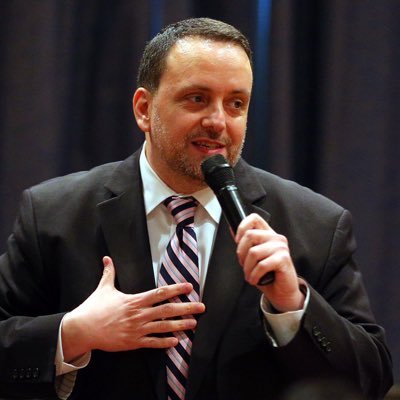
Matthew Ryan

ASCD

WHERE YOU CAN FIND ME SOON
ON DEMAND
Manage Your Time or Time Will Manage You Book Study
Communications – MicroCredential Certification through Illinois Principals Association
June 23-25
MORE OF MY MUSINGS
Podcasts
4 New Releases in the Last Month
NEW RELEASE – Dr. Efrain Martinez and I chat around ‘The Journey’ of Leadership
NEW RELEASE – A Keynote turned into a Podcast from IEI Spring Summit in Colorado
MCUSD Staff Room Podcast – End of Year Reflection
Transformative Principal with Jethro Jones(w/Mike Lubelfeld and Nick Polyak)
Writing
Unfinished Leader (written with Mike Lubelfeld and Nick Polyak)
School Leadership Framework for Growth and Development is now available on Amazon.
Edutopia –Leading with Integrity
“Every time you choose to avoid a difficult conversation, it is a selfish decision. Why? Because the only person who could possibly benefit from avoiding a difficult conversation is you. And that win is only emotional and temporary.”
ASCD – Four Must-Do’s For Empowered Principals
“Vision—now and always—is the difference maker. Great principals can imagine a brighter future for their building, even in the midst of tribulation, that can bring energy and excitement to those they serve. If you cannot imagine education at large and your particular school as significantly better and different than it is in its current state, it is going to be hard to lead significant change.”
Thanks for taking the time to read this newsletter.
It would mean the world to me if you could share it with one person each week. We all get one chance to live a life of passion and purpose. Help me maximize my one at-bat.